


Fusion and Plasmas Dynamics Laboratory
- [Aug. 2026] Portnoy's Complaint
- 문찬호 |
- 2026-08-03 18:15:50|
- 7
- 2026-08-03 18:15:50|
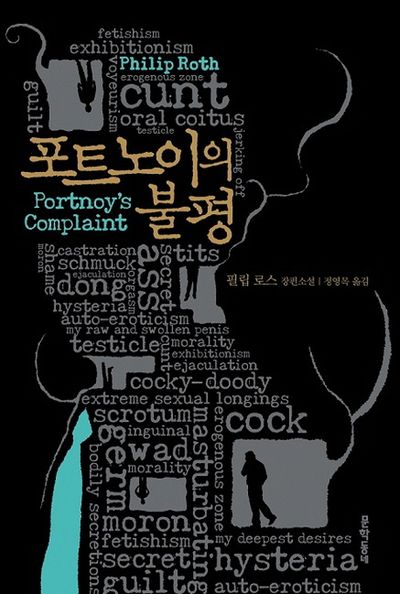
Portnoy's Complaint (Philip Roth)
Breaking free from external norms might bring freedom, but what is truly difficult to escape may, in fact, be the standards we have created ourselves.
Portnoy's Complaint is a confessional novel in which Alexander Portnoy, a young man raised in a Jewish family, pours out the story of his life to his psychoanalyst.
In the depths of his monologue, religious norms, cultural traditions, sexual desires, resentment toward his family, societal expectations, and guilt are all intertwined.
At times, his honesty is so excessive and uncomfortable that the novel is often read as a provocative comedy filled with explicit humor.
Yet I think its true subject is not desire itself, but the human mind when instinct collides with the moral framework shaped by parental love, tradition, and society.
Portnoy is a man divided between two selves. Most of us desire freedom while simultaneously longing for recognition. We also want to follow our desires but still feel honorable.
He is both the intelligent, moral "good son" his family and society expect him to be and a man irresistibly drawn to the very taboos he wishes to destroy.
His inner conflict makes us rethink the clash between the pursuit of personal happiness and societal approval.
Furthermore, it raises a fundamental question: "How much of my identity is entirely my own, and how much has been programmed by the anxieties and expectations of those who raised me?"
In the end, what bothers Portnoy is neither his parents nor religion, but the external voices that have become inseparable from his own conscience. He embodies a person paralyzed between the desperate obligation to satisfy rigid moral standards and the chaotic pursuit of personal liberation.
Portnoy never succeeds in reconciling these opposing selves. His struggle reminds us that embracing ourselves completely—including the darkest and most absurd desire within us—is perhaps the most difficult yet essential step toward genuine freedom.
If we do not confront the contradictions within our own minds, perhaps we too will one day find ourselves lying on the analyst's couch, delivering our own endless complaints.
| 첨부파일 |
|
|---|